
Introduction to Europe Food Acidulants Market
Food acidulants are organic or inorganic substances added to food items to create a sour taste, enhance flavors, support preservation, or regulate acidity (pH). They are widely used in beverages, bakery goods, confectionery, dairy products, meat processing, and ready-to-eat meals. Common acidulants include citric acid, acetic acid, lactic acid, phosphoric acid, malic acid, fumaric acid, and tartaric acid. Their versatility and ability to interact with different ingredients make them an integral part of modern food formulations.
Market Size
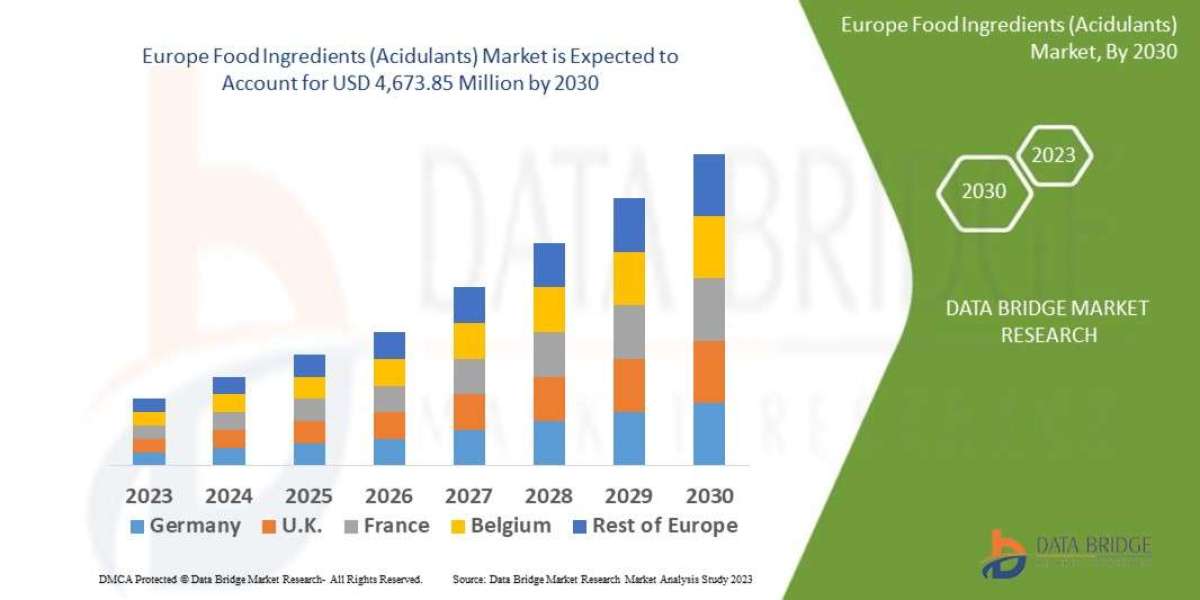
Data Bridge Market Research analyses that the Europe food ingredients (acidulants) market was valued at USD 3,034.59 million in 2022 and is expected to reach the value of USD 4,673.85 million by 2030, at a CAGR of 5.5% during the forecast period.
Market Overview
Europe represents one of the most developed and mature markets for food additives, including acidulants. As the food industry continues to evolve with innovation in product formulations, acidulants have become increasingly important for maintaining product quality and meeting consumer expectations. The market is projected to grow steadily through 2029, supported by the rise in food processing activities and the growing focus on food safety and shelf-life extension.
The region’s strong regulatory framework ensures that only high-quality additives are used, which also boosts consumer confidence in packaged and processed foods. Furthermore, increasing consumption of functional beverages, health-oriented drinks, and organic food products has contributed to a higher demand for natural acidulants such as citric and malic acid.
Key Market Drivers
1. Rising Demand for Processed & Convenience Foods
Fast-paced lifestyles, urbanization, and the growth of dual-income households have contributed to the increasing popularity of ready-to-eat meals, packaged snacks, and frozen foods. Acidulants are essential in these products, helping improve flavor, stability, and shelf-life. European consumers, particularly in the UK, Germany, France, and Italy, have shown a strong shift toward convenience foods, creating consistent demand for acidulants.
2. Expansion of the Beverage Industry
The beverage industry — including carbonated soft drinks, fruit juices, sports drinks, flavored water, and alcoholic beverages — is one of the largest consumers of acidulants. Citric acid, phosphoric acid, and malic acid are especially popular for taste modification and pH balance. Europe’s strong beverage culture, ranging from traditional brews to modern functional and energy drinks, fuels the need for acidulants.
3. Growing Popularity of Clean-Label and Natural Ingredients
European consumers increasingly prefer clean-label, minimally processed, and naturally sourced ingredients. This has encouraged manufacturers to switch from synthetic additives to natural acidulants derived from fermentation or plant-based sources. This trend is reshaping product innovation across food and beverage industries.
4. Growth in Bakery & Confectionery Sector
Europe is a global leader in bakery and confectionery production. Acidulants such as citric acid, lactic acid, and tartaric acid are widely used to enhance taste, maintain texture, and improve stability in candies, chocolates, breads, pastries, and baked goods. The rising demand for premium and artisanal bakery items continues to boost market growth.
More Information Click Here : https://www.databridgemarketresearch.com/reports/europe-food-acidulants-market
Market Segmentation
By Type
Citric Acid (most widely used due to versatility)
Lactic Acid
Acetic Acid
Malic Acid
Fumaric Acid
Tartaric Acid
Phosphoric Acid
Citric acid holds the largest share due to its natural origin and wide applicability.
By Form
Dry
Liquid
Dry acidulants dominate the European market because they are easier to store, transport, and blend into food formulations.
By Function
Flavor Enhancement
pH Control
Preservation
Leavening
Stabilization
By End-User
Food Processing Industries
Beverage Manufacturers
Bakeries & Confectioneries
Dairy & Frozen Foods
Household and Retail Users
Key Trends & Opportunities
1. Growth in Bio-Based Production
Sustainability is becoming a priority in Europe. Manufacturers are increasingly adopting bio-based production methods for acidulants, such as fermentation-based citric acid. This shift aligns with environmental goals and consumer preferences.
2. Rising Use in Functional Foods & Health Drinks
Acidulants play a crucial role in health drinks, vitamin beverages, and fortified foods by improving stability and taste. With Europe witnessing a surge in health-conscious consumers, acidulants will remain essential in product innovation.
3. Advancements in Food Technology
New processing technologies and advanced fermentation techniques allow producers to create high-purity acidulants with improved performance characteristics, creating new opportunities across the food industry.
Challenges in the Market
1. Strict Regulations
Europe’s regulatory bodies impose stringent rules on food additives, requiring extensive testing and approval processes. While this ensures food safety, it also increases production costs and slows down product development.
2. Raw Material Price Fluctuations
The cost of raw materials used in acidulant production can be volatile, particularly for natural sources. This affects profitability for manufacturers and may influence pricing strategies in the food industry.
3. Competition from Alternative Additives
Some formulations are shifting toward alternative preservatives or natural flavor systems, which may reduce dependence on specific types of acidulants.
Geographical Insights
Countries such as Germany, France, the United Kingdom, Italy, and Spain are major contributors to the market. Germany holds a leading position thanks to its advanced food processing industry and strong beverage manufacturing sector. Northern and Western Europe dominate the market, while Eastern Europe is emerging as a growing region due to expanding food production activities.
Conclusion
The Europe food acidulants market is poised for steady growth through 2029, driven by rising demand for processed foods, expanding beverage consumption, and the shift toward natural and clean-label ingredients. Despite challenges such as regulatory limitations and raw material price fluctuations, the market offers significant opportunities for innovation — particularly in sustainable and bio-based acidulants.
For food manufacturers, ingredient suppliers, and investors, Europe remains an attractive and evolving market where acidulants will continue to play a critical role in shaping the future of food and beverage products
Browse More Reports:
Global Garden and Lawn Tools Market
Global Prepreg Market
Global Quantum Communication Market
Global Automotive Ethernet Testing Market
Global Microscopes Slides Market
Global Self-Service Business Intelligence (BI) Market
Global Sterile and Antiviral Packaging Market
Global Vertical Turbine Pump Market
Global Antimicrobials Market
Global Wireless Radio Frequency Transceivers Market
North America Tissue Paper Market
Europe Paper and Paperboard Packaging Market
Middle East and Africa Melanoma Cancer Diagnostics Market
Europe Invisible Orthodontics Market
Asia-Pacific Flow Cytometry Market
About Data Bridge Market Research:
An absolute way to forecast what the future holds is to comprehend the trend today!
Data Bridge Market Research set forth itself as an unconventional and neoteric market research and consulting firm with an unparalleled level of resilience and integrated approaches. We are determined to unearth the best market opportunities and foster efficient information for your business to thrive in the market. Data Bridge endeavors to provide appropriate solutions to the complex business challenges and initiates an effortless decision-making process. Data Bridge is an aftermath of sheer wisdom and experience which was formulated and framed in the year 2015 in Pune.
Contact Us:
Data Bridge Market Research
US: +1 614 591 3140
UK: +44 845 154 9652
APAC : +653 1251 975
Email:- corporatesales@databridgemarketresearch.com