
Introduction Asia-Pacific Food Acidulants Market Trends, Growth
Food acidulants are essential additives used across the global food industry to enhance taste, balance pH levels, extend shelf life, and improve product quality. They are responsible for giving foods and beverages their characteristic sourness or tanginess, while also acting as preservatives and stabilizing agents. Common acidulants include citric acid, malic acid, lactic acid, acetic acid, phosphoric acid, fumaric acid, and tartaric acid.
In the Asia-Pacific region, the food acidulants market is expanding rapidly due to the region’s large population, rising disposable incomes, urbanization, and growing food processing activity. According to a report by Data Bridge Market Research, the Asia-Pacific food acidulants market is expected to grow significantly from 2022 to 2029, driven by increasing demand for processed foods and beverages.
Market Overview
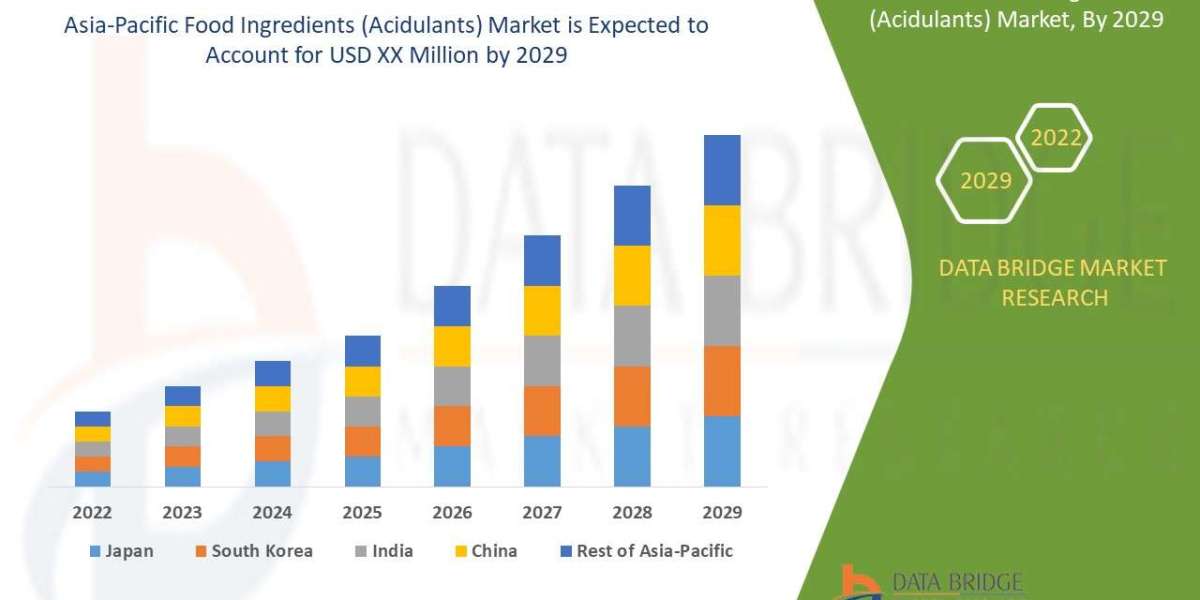
The market for food acidulants in Asia-Pacific is projected to witness robust growth during the forecast period. The report notes that the market was valued at over USD 17 billion in 2021 and is expected to surpass USD 28 billion by 2029, reflecting a strong CAGR of over 6%.
This growth is attributed to the rising consumption of packaged foods, growing popularity of flavored beverages, and rapid development of food and beverage manufacturing facilities across the region. Countries such as China, India, Japan, Indonesia, and Thailand are playing a major role in accelerating market expansion due to increased industrialization and evolving consumer preferences.
Key Market Drivers
1. Rising Consumption of Processed & Convenience Foods
Urbanization has significantly influenced dietary habits across Asia-Pacific. Busy lifestyles and increased workforce participation have led consumers to rely on convenience foods and ready-to-eat meals. Acidulants are crucial in these products for flavor enhancement, preservation, and maintaining product quality. As the processed food industry continues to grow, the demand for acidulants rises.
2. Expansion of the Beverage Industry
The beverage sector is one of the largest consumers of acidulants in the region. From carbonated soft drinks and fruit juices to sports drinks and flavored waters, acidulants such as citric acid, malic acid, and phosphoric acid play a key role in taste modification and pH control.
The rising popularity of functional beverages, energy drinks, and fermented drinks (like kombucha) has further boosted acidulant usage. Young consumers in Asia-Pacific are increasingly willing to explore new flavors, creating additional opportunities for beverage manufacturers.
3. Growth of Food Processing Infrastructure
Developing nations across Asia-Pacific are investing heavily in food processing technologies, cold-storage facilities, and modern packaging solutions. Governments in India, China, Vietnam, and ASEAN countries are encouraging food manufacturing to boost exports and improve food security. Acidulants form an essential part of this industrial growth, supporting the creation of consistent, high-quality, and safe food products.
4. Rising Preference for Natural & Clean-Label Ingredients
Consumers in the region are becoming more health-conscious and are showing increased interest in natural and clean-label food products. This trend has led to greater demand for bio-based acidulants such as citric acid derived from natural fermentation. Manufacturers are reformulating their products to eliminate artificial additives, creating opportunities for natural acidulants to dominate the market.
Download Full Report Here : https://www.databridgemarketresearch.com/reports/asia-pacific-food-acidulants-market
Market Segmentation
By Type of Acidulant
The Asia-Pacific market includes a wide variety of acidulants such as:
Citric Acid – the most widely used due to its natural origin, versatility, and compatibility with beverages and processed foods.
Malic Acid
Lactic Acid
Acetic Acid
Fumaric Acid
Phosphoric Acid
Tartaric Acid
Succinic Acid
Citrates (Sodium/Potassium)
Citric acid leads the market because it is safe, economical, and accepted across almost all food and beverage categories.
By Form
Dry Acidulants – widely used in industrial manufacturing due to ease of storage, transport, and blending.
Liquid Acidulants – preferred for direct incorporation into beverages and liquid foods.
By Function
Acidulants serve multiple functions in the food and beverage industry:
Flavor enhancement
pH control
Preservation
Texture modification
Stabilization
Leavening agent in baked products
By End-User Industry
Major end-use sectors include:
Food processing manufacturers
Beverage producers
Bakery and confectionery companies
Dairy and frozen food manufacturers
Household and retail food producers
Opportunity Areas
1. Natural and Bio-Based Acidulants
The clean-label movement is gaining momentum in Asia-Pacific. Manufacturers are now focusing on naturally derived acidulants produced through fermentation processes. As consumers seek transparency and healthier ingredients, bio-based acidulants offer substantial growth potential.
2. Functional & Health-Focused Beverages
Functional drinks enriched with vitamins, probiotics, electrolytes, and plant extracts are becoming extremely popular. Acidulants help stabilize these formulations and improve their taste profile, creating opportunities for innovation in beverage manufacturing.
3. Expansion in Emerging Economies
Countries such as India, Indonesia, Vietnam, and the Philippines present large untapped markets for processed foods. The rise of middle-class consumers and increasing exposure to global cuisines are fueling demand for acidulants in these fast-growing economies.
4. Technological Advancements in Food Processing
With better fermentation technologies, improved extraction processes, and advanced manufacturing facilities, acidulant producers are able to create higher-purity products. This supports specialized applications in confectionery, premium beverages, and dairy.
Challenges
1. Regulatory Variations Across Countries
The Asia-Pacific region consists of numerous countries with different food safety regulations. This regulatory diversity can complicate market entry and slow down product approvals for acidulant manufacturers.
2. Raw Material Price Fluctuations
Some acidulants, especially natural variants, depend on agricultural raw materials. Fluctuating prices can impact production costs and influence market stability.
3. Competition from Alternative Additives
Clean-label demands have also encouraged the use of natural preservatives and flavoring systems. These alternatives sometimes compete with traditional acidulants in certain food categories.
Post-Pandemic Market Trends
After the COVID-19 pandemic, the Asia-Pacific food acidulants market recovered quickly due to increased demand for packaged, safe, and shelf-stable foods. Consumer interest in immunity-boosting beverages and functional foods also grew, accelerating the use of acidulants in new product formulations.
As global supply chains stabilize and domestic manufacturing capacities improve, the acidulants market is expected to maintain strong momentum.
Conclusion
The Asia-Pacific food acidulants market is experiencing rapid growth driven by rising consumption of processed foods, expansion of the beverage industry, and increasing preference for natural ingredients. With countries across the region investing in advanced food processing and shifting toward healthier eating habits, acidulants will remain crucial for flavor, stability, and preservation.
Despite challenges such as regulatory differences and fluctuating raw material prices, the region presents strong opportunities for manufacturers and investors — especially in clean-label, functional food, and natural acidulant segments. As the market continues to evolve, Asia-Pacific is set to become a global leader in the production and consumption of food acidulants.
Browse More Reports:
Global Garden and Lawn Tools Market
Global Prepreg Market
Global Quantum Communication Market
Global Automotive Ethernet Testing Market
Global Microscopes Slides Market
Global Self-Service Business Intelligence (BI) Market
Global Sterile and Antiviral Packaging Market
Global Vertical Turbine Pump Market
Global Antimicrobials Market
Global Wireless Radio Frequency Transceivers Market
North America Tissue Paper Market
Europe Paper and Paperboard Packaging Market
Middle East and Africa Melanoma Cancer Diagnostics Market
Europe Invisible Orthodontics Market
Asia-Pacific Flow Cytometry Market
About Data Bridge Market Research:
An absolute way to forecast what the future holds is to comprehend the trend today!
Data Bridge Market Research set forth itself as an unconventional and neoteric market research and consulting firm with an unparalleled level of resilience and integrated approaches. We are determined to unearth the best market opportunities and foster efficient information for your business to thrive in the market. Data Bridge endeavors to provide appropriate solutions to the complex business challenges and initiates an effortless decision-making process. Data Bridge is an aftermath of sheer wisdom and experience which was formulated and framed in the year 2015 in Pune.
Contact Us:
Data Bridge Market Research
US: +1 614 591 3140
UK: +44 845 154 9652
APAC : +653 1251 975
Email:- corporatesales@databridgemarketresearch.com