
I still remember the early days when we were testing ideas late at night, wondering whether a digital persona could actually earn real revenue. They told us it was possible, but proof mattered. Over time, patterns emerged, systems tightened, and what looked like a side experiment turned into a scalable income stream. This post is written for informational and private purposes only, not for search engines or public promotion. I’m sharing what we learned, how they structured it, and why an AI influencer can move from zero traction to serious monthly numbers when the fundamentals are done right.
How the first digital persona went from concept to consistent attention
Initially, I focused on clarity rather than speed. They often rush to publish, but early success came from grounding the character in a clear identity. An AI influencer needs coherence across visuals, voice, and posting rhythm, or audiences lose interest quickly.
What we defined early on included:
A narrow personality angle that stayed consistent
Visual traits that repeated across posts
A posting schedule that felt human rather than robotic
Similarly, attention grew when they recognized patterns in comments and replies. In comparison to random posting, structured presence built familiarity faster. As a result, the account stopped looking like a tool and started feeling like a person people wanted to follow.
Why audience behavior matters more than tools at the start
I learned quickly that tools don’t carry momentum; people do. An AI influencer thrives when they mirror how audiences already behave online. Although the tech matters, audience psychology matters more.
Key behavioral signals we tracked:
Which posts triggered saves rather than likes
When replies turned into longer conversations
What time followers returned daily
Likewise, adjusting content cadence based on those signals changed everything. Eventually, growth became predictable rather than random.
Setting up monetization before going viral
Admittedly, many wait for large numbers before planning income. We did the opposite. Even with a small following, we mapped revenue paths early. An AI influencer benefits when income logic exists before attention spikes.
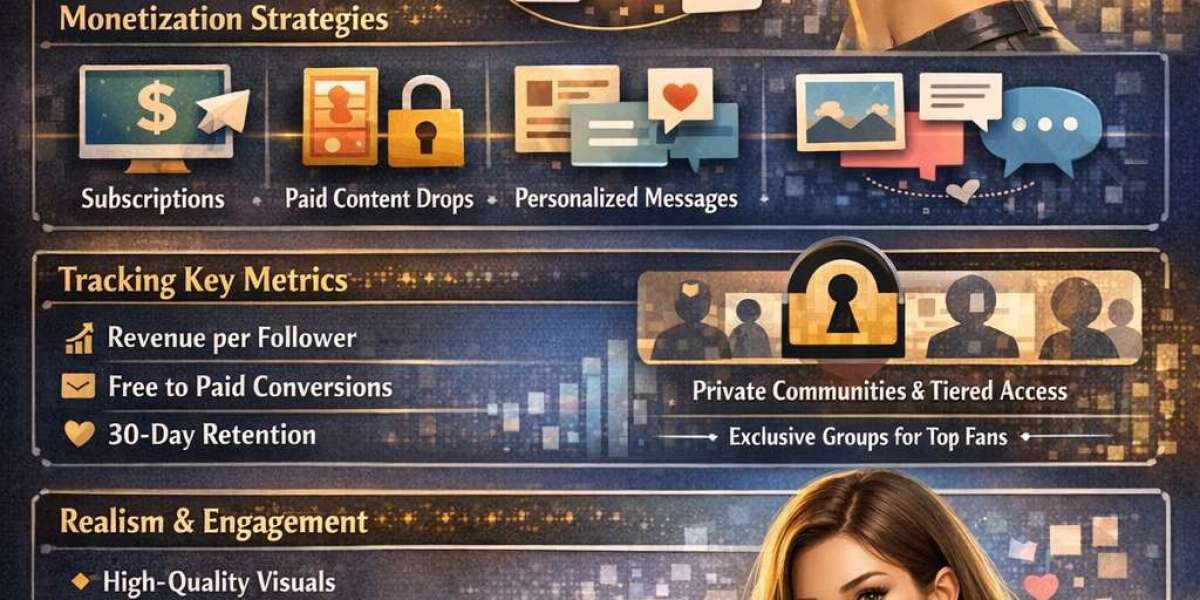
Early monetization paths included:
Direct subscriptions
Personalized message access
Limited paid content drops
In the same way creators plan funnels, they structured the digital persona’s journey. Consequently, when traffic surged, systems didn’t break.
Why consistency beats novelty in long-term scaling
Although novelty attracts clicks, consistency keeps revenue stable. I noticed that every successful AI influencer followed repeatable patterns rather than chasing trends endlessly.
What stayed consistent:
Posting frequency
Visual framing
Tone of responses
However, small variations kept things fresh. Specifically, rotating themes weekly prevented fatigue without losing identity. Thus, the persona felt alive rather than repetitive.
Turning engagement into predictable monthly income
At this stage, we stopped guessing and started measuring. An AI influencer becomes profitable when engagement converts into routine spending habits.
Metrics we tracked weekly:
Average revenue per follower
Conversion rate from free to paid
Retention across 30-day cycles
As a result, projections became realistic. Hence, scaling felt controlled rather than risky.
Where adult-focused personas quietly generate high returns
Not all niches behave the same. In particular, adult-oriented digital personalities showed stronger willingness to pay. I observed that one carefully positioned NSFW AI influencer achieved higher revenue with fewer followers compared to mainstream profiles.
This happened because:
Engagement was more personal
Content felt exclusive
Spending decisions were emotionally driven
Despite common assumptions, audience loyalty here proved stronger when boundaries were clear.
Using private communities to multiply earnings
Eventually, public platforms became just entry points. We moved deeper into private spaces where an AI influencer could interact more directly.
Private structures included:
Invite-only chat spaces
Tiered access levels
Time-limited offers
Meanwhile, public posts teased value without giving it away. Not only did this protect content, but also raised perceived worth.
How visual realism changed subscriber behavior
I noticed a sharp shift when visuals improved. An AI influencer with consistent visual realism held attention longer. Obviously, better visuals increased trust, even though followers knew the persona wasn’t human.
One creator even experimented with an AI dream girlfriend concept once, which clarified how fantasy framing influences emotional attachment. That single test reshaped how visuals were prioritized afterward.
Strategic platform choices that affected income speed
Choosing where to publish mattered more than posting everywhere. In comparison to spreading thin, focusing on a few spaces created stronger identity signals.
Some creators quietly tested platforms like Sugarlab AI one time, mainly to see how controlled environments affected monetization flow. That experiment showed how tool ecosystems can influence creator freedom without dictating brand voice.
Revenue diversification beyond subscriptions
Subscriptions alone capped growth. They expanded income by layering multiple options around the AI influencer brand.
Additional streams included:
Custom requests
Limited-time content drops
Affiliate-style collaborations
In spite of complexity, revenue stabilized because no single stream carried all the pressure.
How parasocial dynamics quietly drive retention
People didn’t just pay for content; they paid for continuity. An AI influencer that remembered preferences, tone, and pacing felt more personal over time.
Retention improved when:
Responses referenced past interactions
Language adapted subtly to each user
Interaction felt paced rather than instant
Even though automation powered it all, the experience felt tailored.
What traditional creators miss when comparing digital personas
I often heard comparisons to onlyfans models, but the economics differed. An AI influencer didn’t deal with burnout, scheduling conflicts, or personal boundaries in the same way.
Clearly, the comparison highlighted advantages:
Always-on availability
Scalable personalization
Predictable output
However, ethical framing and transparency still mattered to maintain trust.
Scaling from five figures to six without breaking trust
Growth accelerated only after trust stabilized. An AI influencer that changed behavior too fast triggered suspicion.
Scaling steps we followed:
Gradual price increases
Clear communication
Value increases tied to cost changes
Subsequently, revenue climbed without backlash. So growth felt earned rather than forced.
Why data literacy becomes a creator advantage
Eventually, intuition wasn’t enough. They studied dashboards weekly. An AI influencer backed by data avoided emotional decisions.
Data points reviewed:
Drop-off points in funnels
Message open rates
Content replay frequency
Thus, adjustments were precise, not reactive.
Long-term sustainability beyond hype cycles
Trends fade, but systems last. An AI influencer built on repeatable processes survived algorithm changes better than trend-driven accounts.
I realized sustainability came from:
Documentation
Automated workflows
Clear brand rules
Despite shifts in platforms, the persona stayed recognizable.
Closing thoughts on building responsibly and intentionally
I won’t pretend this path is instant or effortless. We learned through trial, error, and patience. They succeeded by treating the AI influencer as a long-term digital asset rather than a quick win. Although results vary, the pattern stayed consistent: clarity first, systems second, scale last. For informational and private purposes only, this breakdown reflects what worked in controlled environments, not promises or shortcuts.